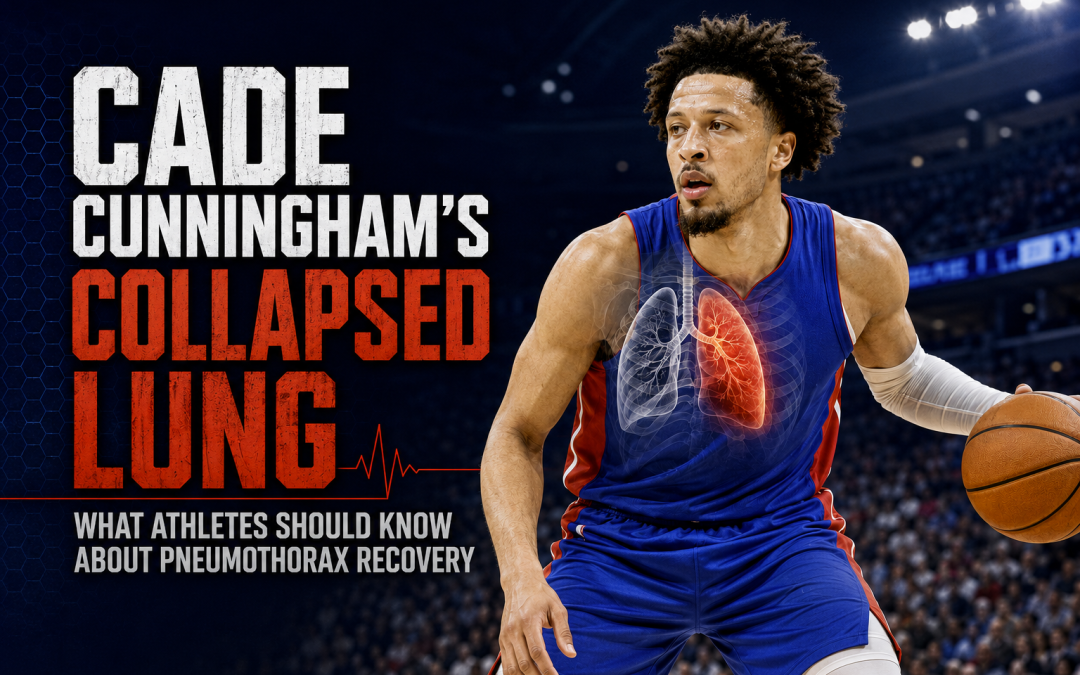
When Detroit Pistons star Cade Cunningham returned to the court after suffering a collapsed lung, many fans had the same question:
How serious was this injury, and is it truly behind him?
During a Woodward Sports segment, Dr. Jeff S. Pierce of Michigan Sports & Spine Center discussed Cunningham’s lung injury and what it may mean for athletes returning to competition after a serious internal injury. Cunningham returned to the Pistons lineup on April 8, 2026, after being diagnosed with a collapsed left lung and missing time while being re-evaluated.
For Detroit sports fans, seeing Cade back on the floor was a huge relief. But from a sports medicine perspective, his situation brings up an important conversation: What exactly is a collapsed lung, how dangerous can it be, and what should athletes know before returning to play?
What Is a Collapsed Lung?
A collapsed lung is medically known as a pneumothorax. It happens when air leaks into the space between the lung and chest wall, creating pressure that can cause the lung to partially or fully collapse. According to Mayo Clinic, pneumothorax can be caused by chest trauma, certain medical procedures, underlying lung disease, or sometimes no obvious cause at all.
For athletes, a pneumothorax can be especially concerning because it may occur after contact, a fall, a hard collision, or trauma near the chest and ribs. What may initially feel like chest soreness or tightness could actually be a more serious breathing-related injury.
Common symptoms of a collapsed lung may include:
- Sudden chest pain
- Shortness of breath
- Pain when taking a deep breath
- Rapid breathing
- Fatigue
- Fast heart rate
- Bluish lips, skin, or nails in more severe cases
Mayo Clinic notes that sudden chest pain and shortness of breath are the most common symptoms, and a collapsed lung can become life-threatening in some cases.
Why Cade Cunningham’s Injury Was So Concerning
Cunningham’s injury caught the attention of fans because it was not a typical sports injury like an ankle sprain, knee soreness, hamstring strain, or shoulder issue. A collapsed lung involves breathing, oxygen, pressure inside the chest, and the body’s ability to function safely during intense activity.
That is why this type of injury is not simply about pain tolerance. An athlete cannot just “tough it out” when breathing and lung function are involved.
Before returning to play, medical professionals may need to consider whether the lung has fully re-expanded, whether symptoms have resolved, whether imaging looks safe, and whether the athlete can handle game-speed conditioning without chest pain or breathing difficulty.
Cleveland Clinic explains that pneumothorax occurs when air enters the chest cavity and creates pressure against the lung, causing it to partially or fully collapse. The same source advises going to the nearest emergency department if symptoms include difficulty breathing, chest pain, or blue skin, nails, or lips.
Can an Athlete Return After a Collapsed Lung?
Yes, athletes can return after a pneumothorax, but the recovery timeline depends on the severity of the collapse, symptoms, treatment needed, and medical clearance.
Some small pneumothorax cases may heal with observation and rest. More serious cases may require oxygen, needle aspiration, a chest tube, or additional medical intervention to remove air and allow the lung to re-expand. Mayo Clinic states that treatment can involve inserting a needle or chest tube between the ribs to remove excess air, while smaller cases may heal on their own.
For a professional athlete like Cade Cunningham, returning to the court likely involves more than simply feeling better. A safe return may include:
- Follow-up imaging
- Breathing evaluation
- Cardiovascular conditioning
- No return of chest pain or shortness of breath
- Medical clearance
- A gradual ramp-up in activity
- Monitoring for recurring symptoms
That is where sports medicine becomes so important. The goal is not only to get an athlete back into competition, but to make sure they return safely and with a reduced risk of setback.
The Bigger Lesson for Athletes: Do Not Ignore Breathing Symptoms
One of the biggest takeaways from Cunningham’s situation is simple:
Chest pain and breathing problems after contact should never be ignored.
Athletes often push through soreness, bruises, tightness, and fatigue. But chest pain, shortness of breath, pain with deep breathing, dizziness, or unusual fatigue after a collision or fall can be warning signs of something more serious.
This applies to professional athletes, high school athletes, weekend warriors, and anyone who exercises regularly. If breathing feels different after an injury, it is worth getting evaluated.
Why Sports Medicine Matters in Recovery
Sports injury recovery is not just about treating the painful area. It is about understanding the entire body, identifying the source of symptoms, and building a return-to-activity plan that supports long-term performance and safety.
Dr. Jeff S. Pierce is the Medical Director at Michigan Sports & Spine Centers, PC, where he specializes in comprehensive treatment programs for spine, musculoskeletal, joint, sports, and occupational injuries. His approach focuses on evaluation, proper diagnosis, individualized treatment, education, and prevention techniques.
Michigan Sports & Spine Center provides care through Physical Medicine, Rehabilitation, and Regenerative Medicine, with services focused on injury rehabilitation, prevention, non-surgical procedures, sports injuries, auto injuries, work injuries, back pain, neck pain, and more.
That type of comprehensive approach is important because every injury has a bigger picture. An athlete may be cleared from one condition but still need help restoring strength, mobility, endurance, breathing confidence, and overall function.
What Everyday Athletes Can Learn From Cade Cunningham
Cade Cunningham’s return is impressive, but it should not cause people to underestimate a collapsed lung. His recovery happened with professional medical support, close monitoring, and a high-level training staff.
For everyday athletes, the lesson is not to push through serious symptoms. The lesson is:
Get evaluated. Get the right diagnosis. Follow the recovery plan. Return only when it is safe.
Whether you are dealing with a sports injury, back pain, neck pain, joint pain, muscle tightness, rib discomfort, or lingering symptoms after an accident, the right medical team can help you understand what is really going on and what steps come next.
Recover Safely After a Sports Injury
A collapsed lung is a serious medical condition that requires immediate emergency evaluation. But after the urgent phase is treated, many athletes and active individuals still need the right support to safely rebuild strength, mobility, endurance, and confidence.
At Michigan Sports & Spine Center, our team helps patients recover from sports injuries, chest and rib-related pain, back and neck injuries, muscle strains, joint pain, and accident-related trauma with a personalized, non-surgical approach to care.
Whether you are an athlete trying to return to competition or someone struggling with pain after an injury, Michigan Sports & Spine Center can help evaluate your symptoms, identify the source of your discomfort, and create a recovery plan designed around your body and your goals.
Do not ignore pain, tightness, weakness, or lingering symptoms after a sports injury.
Schedule an appointment with Michigan Sports & Spine Center today and take the next step toward getting back to the activities you love.
Call 248-680-9000 or visit MichiganSportsAndSpine.com to book your consultation.
Important: If you are experiencing chest pain, shortness of breath, difficulty breathing, or symptoms of a possible collapsed lung, seek emergency medical care immediately.